
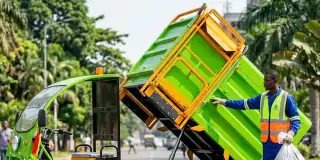


Full bags
01
Flag your full bags
One tap: say how many sorted bags are waiting outside your home, and the request goes to the local collector.
Our goal
What happens to the waste?
At the sorting centre, collected waste is weighed and separated by material. Most of it is dried into fuel for a power plant: that is the heart of VIPRO. Some of the plastic takes another route and becomes paving stones for the city.
See every stream
Illustration of the intended process. AI-generated images.
Step 1 / 3
Collected plastics are sorted, then fed through a shredder: they become small flakes, compacted into blocks. Reduced this way, plastic takes up far less space and is easy to store and transport. It is the raw material of the paving stone.
Step 2 / 3
The flakes are heated until they melt, then mixed with sand. The melted plastic coats every grain and binds the mix, the way cement would. It is poured into a mould and pressed to drive out the air.
Step 3 / 3
Dried and turned into fuel, the plastic feeds a power plant. It no longer clogs the gutters or goes up in smoke: it lights up homes.
Why VIPRO exists
Plastic bags block the drains and make floods worse. Smoke from burning heaps drifts into homes. What is missing is a working chain: drop-off points close to home, collectors who get paid, a plant at the end of the line. That chain is what VIPRO is building.
17M+
people in Kinshasa
World Bank, 28 April 2026≈ 12,000 t
of waste every day
World Bank, 28 April 2026≈ 98%
burned or dumped in the open
World Bank, 28 April 2026While you readSince you got here, Kinshasa has produced about 0 kg of waste.
Estimate: about 139 kg per second, based on World Bank figures.
First step, tonight: food scraps on one side, plastic on the other. Everything else starts there.
Take the pledgeA waste's journey
On the streetDiscarded bottles that end up in the gutters.
CollectionCollectors pick up plastic across the neighbourhoods.
Door to doorResidents hand over their sorted bottles.
Weighed, paidAt the drop-off point, every kilo is weighed and paid for.
SortingAt the sorting centre, each material goes down its own line.
ShreddingPlastic is shredded into small flakes.
PressingMixed with sand, the flakes become paving stones.
In the cityPaving stones for squares, yards and pavements.
VIPRO is building the whole chain, from the bag left at the door to the power leaving the plant. Every step is work for people in the DRC.
Discover the programmeOn your phone
The app connects residents with the programme's collectors. It is not published yet: the pilot starts in one Kinshasa district first.
01
One tap: say how many sorted bags are waiting outside your home, and the request goes to the local collector.
02
The VIPRO agent sees the neighbourhood's requests on the map and follows the planned route, stop by stop. You can see them coming.
03
Each bag is weighed on the spot by a VIPRO agent; the weight shows up in your app straight away.
VIPRO Payment sent to your mobile money account.SMS receipt · TRX-48A2
04
Payment goes through a licensed mobile money operator. The receipt arrives by SMS and stays in the app, with all your kilos.


Coming soon on Android and iPhone. To get paid: be 18 or over and have a verified account.
Resident, partner or collector: everyone has a place in the chain. Pick yours.
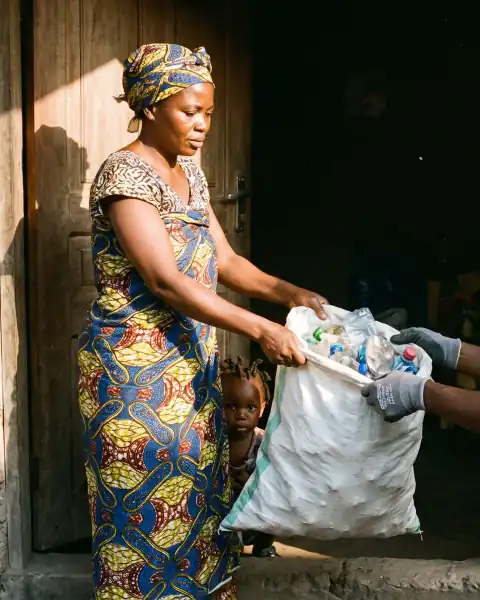
Pledge, sort at home, bring your street along.
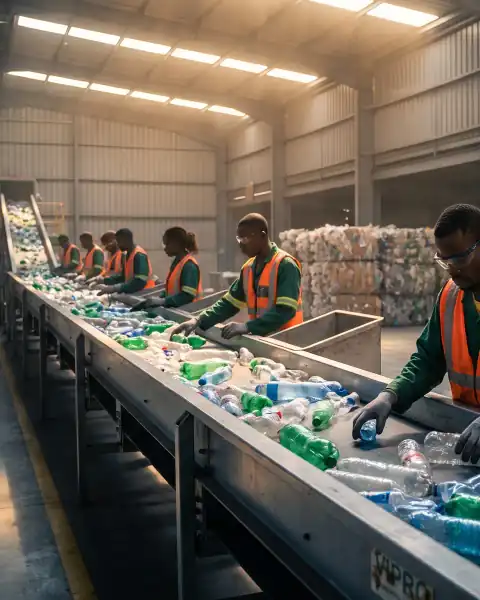
On-site collection, buying recycled materials, funding, research. Tell us what you are looking for.

Already collecting, or looking for work in the sector? Leave us your number.
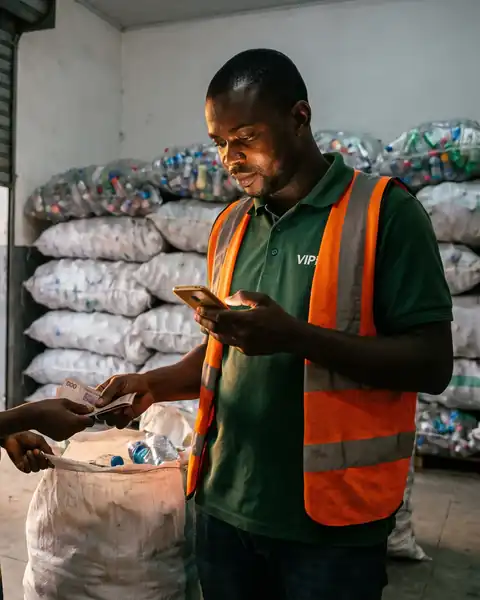
Green Attitude
It is VIPRO's campaign to make sorting a habit. It starts with the people who already sort: the young man who sells bottles by the kilo, the family that keeps one bag just for plastic. Join them with three habits, and tell your neighbours.
Be one of the first in your district.
Three simple habits. Tick the ones you already keep or will start.
Are you a teacher? Sign up my school
VIPRO starts district by district in the capital, with the people already collecting. Once the chain runs in Kinshasa, it moves on to the country's other cities.
Who VIPRO is